Characteristics of homes from different construction periods
- The Groningen housing market
- 2 min.
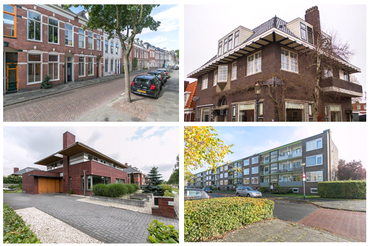
The year of construction can reveal a great deal about the condition of a property. The rule ‘the newer, the better’ is not always applicable to a home’s construction year. We have therefore outlined the characteristics of homes from various construction periods for you.
Between 1920 and 1945
In the Netherlands, eight hundred thousand homes were built between 1920 and 1940. These homes were constructed during a time when quality was more important than quantity. Before the war, high-quality materials were used in construction. For example, window frames were made from oily American pine. Additionally, the cavity wall was introduced. These cavity walls are still used to this day. If the woodwork has been well-maintained, the result is a beautiful, well-constructed home. Such houses are rare, and this scarcity accounts for the immense interest in them.
The beginning of the Second World War marked the end of the heyday of Dutch residential construction. Although housing production was ramped up again after the war, the quality of these post-war homes lagged significantly behind.
Between 1945 and 1970
Many houses were added during the reconstruction period. Particularly between 1945 and 1960, rental properties were built at a rapid pace. In total, over 1.5 million homes were constructed during the reconstruction. During this period, more attention was paid to quantity than quality. Everyone wanted a small house with a garden, and these were built en masse. Examples include neighborhoods full of dual-aspect homes, often with flat roofs, and apartment buildings of 3 or 4 stories with small concrete balconies. Many of the homes built during this period have since been demolished or are scheduled for demolition as part of urban renewal projects.
Spruce window frames were often used in the construction of these homes. These frames have been exposed to wood rot to a greater or lesser extent. In most homes, the window frames have already been replaced, but it is advisable to always make additional inquiries regarding this.
Between 1970 and 1980
In the 1970s, the housing shortage was limited, and focus shifted toward home improvement. Both the quality and the architecture of homes from this period are generally good. Because low-maintenance materials were used, the maintenance costs for these homes are relatively low. Additionally, the homes often feature good insulation. Double glazing, as well as roof and cavity wall insulation, are standard.
These homes can be found in the current residential property listings in Groningen.
Between 1980 and 1990
After 1979, the demand for owner-occupied homes dropped. As a result, almost exclusively subsidized housing was built. These were homes where construction costs and living expenses were minimized as much as possible. Energy conservation was a central focus during this period.
Homes from these years have limited glass surface area and good insulation. It is therefore not surprising that attention was paid to double glazing and roof and cavity wall insulation in these properties. A lot of synthetic material was used, making the homes often low-maintenance.
After 1990
The Building Decree was introduced after 1990. This decree established and recorded construction standards, qualities, and regulations. As a result, the quality and luxury of homes have increased significantly. Heating costs for these homes are low. Furthermore, the homes are built with low-maintenance materials. You should therefore not expect any major maintenance issues.
Also view our new-build homes in Groningen.