Oosterhoogebrug is a quiet and green neighborhood on the outskirts of the city, offering a village feel with urban conveniences nearby.
The Oosterhoogebrug neighborhood is located directly on the Damsterdiep in Groningen, situated between the Oosterparkwijk and Lewenborg neighborhoods. The neighborhood owes its name to the so-called ‘Hoogebrug’ (High Bridge) over the Damsterdiep. There was a second bridge with the same name, and therefore the name ‘Oosterhoogebrug’ was chosen to distinguish it.
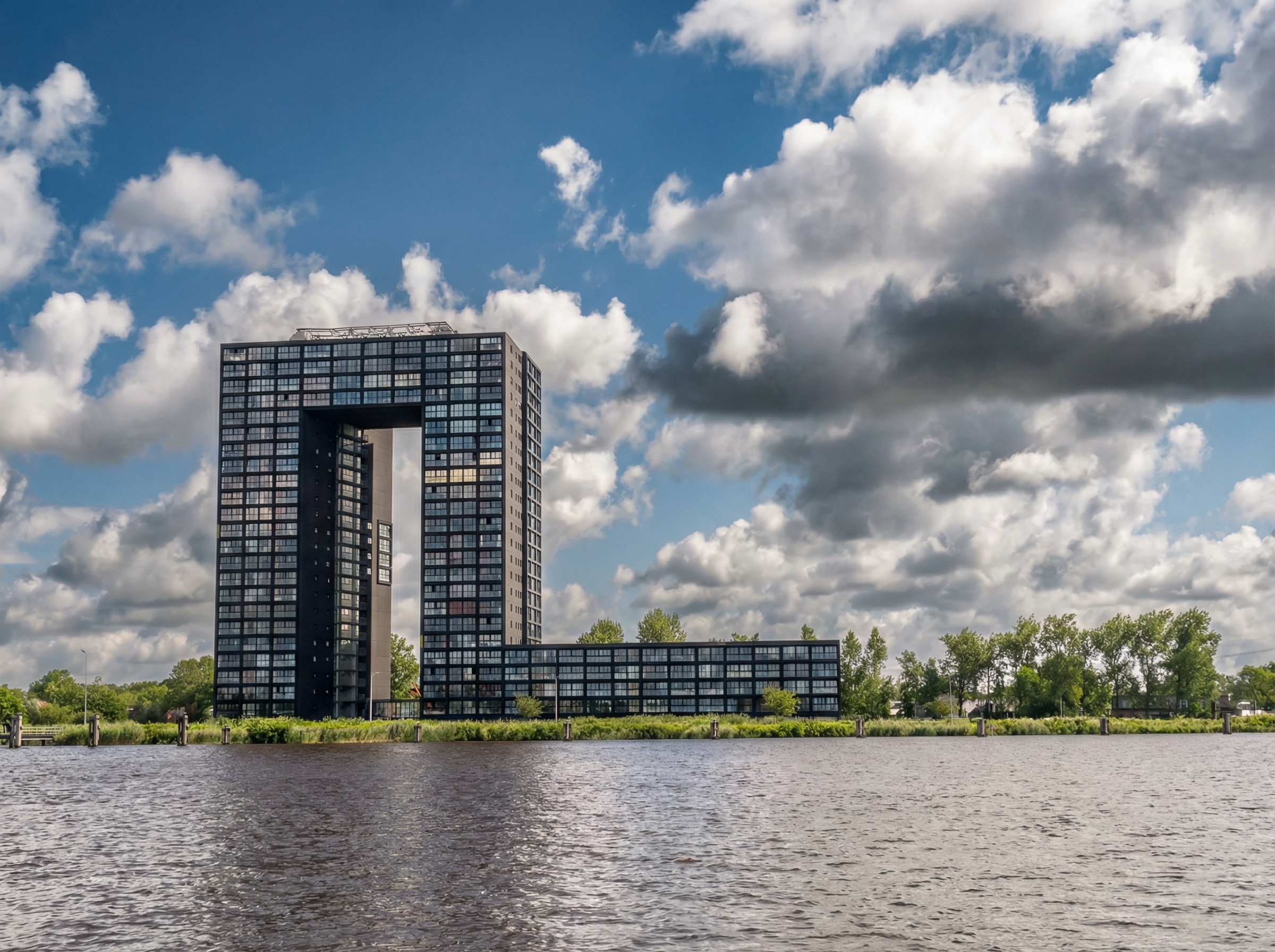
The center of the neighborhood is formed by a residential area from the 1950s and 1960s. The neighborhood was further expanded in the 1970s. A striking building in this area is the Tasmantoren. This is a large apartment complex named after Abel Tasman (a Dutch explorer in the service of the United East India Company (VOC)). The building consists of two residential towers connected at the top by a bridge. The shape of the building is thus inspired by a crawling caterpillar.
The neighborhood features a variety of terraced houses, semi-detached houses, and apartment complexes.
What makes this neighborhood special?
- Quiet, green living environment – the neighborhood is situated along the water and among green fields, providing a pleasant and relaxed atmosphere outside the busy city center.
- Good connections to Groningen city – you can reach the city center quickly by bike or car, yet you still enjoy a village-like, open quality of life.
- More affordable living – on average, house prices here are often lower than in the heart of Groningen, making it attractive for first-time buyers and families.
- Amenities nearby – primary schools, local shops, and sports clubs are within cycling distance, making the neighborhood very practical and livable.