Condensation on your windows: what does it mean for your home?
- Existing Construction
- 3 min.
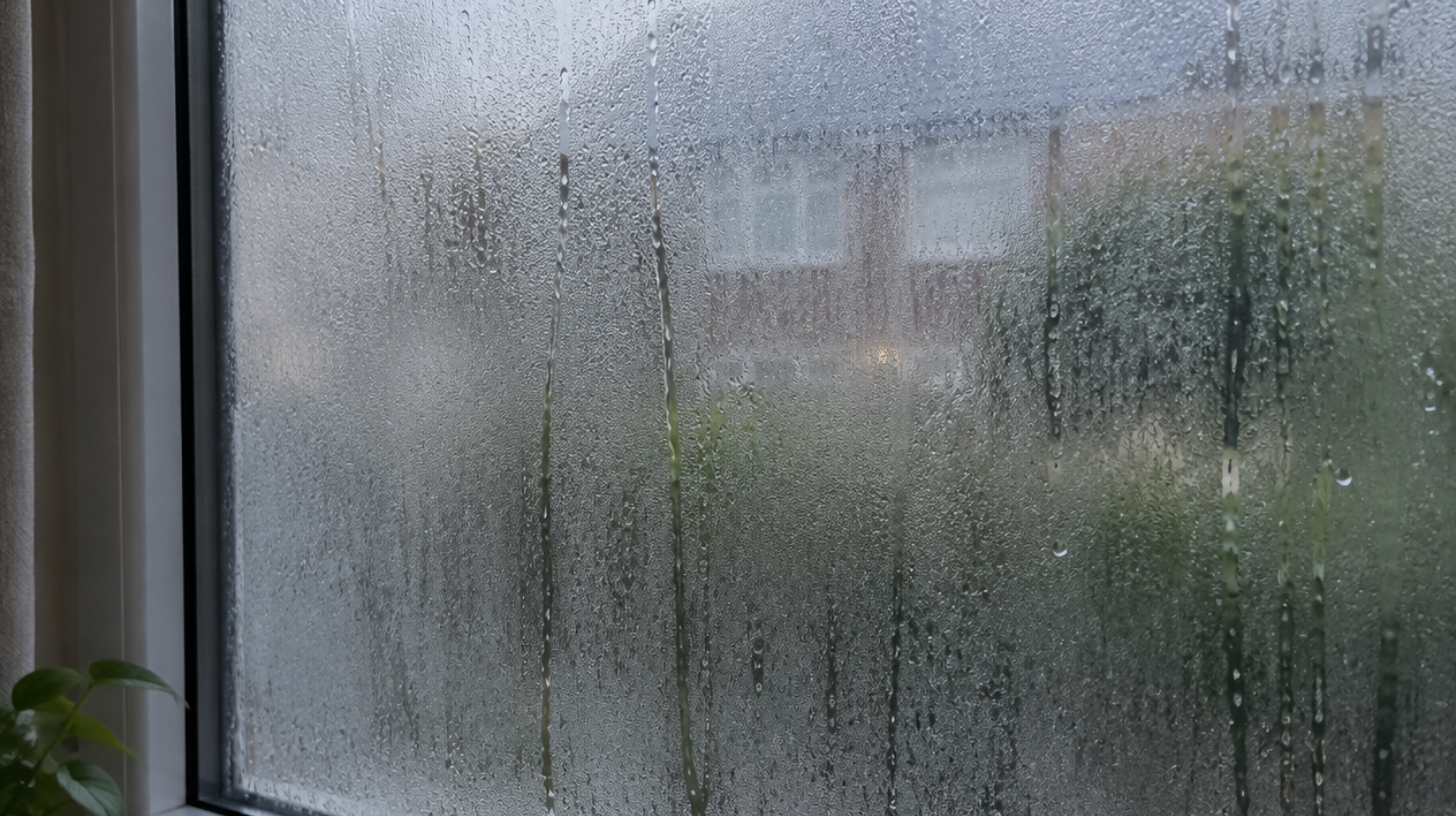
You wake up, walk downstairs, and see that the windows are completely fogged up on the inside. This is a regular occurrence in many homes, especially during autumn and winter. But condensation on your windows is more than just an everyday phenomenon. It can also tell you something about your home’s indoor climate.
It makes a big difference exactly where the condensation is located. On the inside, the outside, or between the glass? Each location has a different potential cause.
Why does condensation form on windows?
Condensation occurs when warm, moist air comes into contact with a cold surface. The air cools down and can then hold less water vapor. The excess moisture settles as tiny droplets on the glass.
A significant amount of moisture is released in a home every day. During showering and cooking, for example, but also through washing, drying, and simply breathing. Is that moisture properly removed through ventilation? Then there is usually little to worry about. If moist air lingers in the house for a long time, the chance of condensation increases. Especially in the colder months, when the temperature difference between inside and outside is greater.
Condensation on the inside, outside, or between the glass?
The place where the condensation forms often provides an important clue about the cause.
Condensation on the inside
Is the condensation on the inside of the window? This may indicate that the humidity in the house is high. Insufficient ventilation or a cold glass surface can also play a role.
A window that fogs up briefly after cooking or showering doesn’t have to be a problem. Are the windows regularly wet for long periods? Then it is wise to pay attention to it.
Condensation on the outside
Condensation on the outside of the window might sound strange, but it is not an immediate cause for concern. In fact, it occurs with well-insulated glazing. Because very little heat escapes from the house to the outside, the outer glass pane remains relatively cold. On a crisp and damp morning, this can cause condensation to form. As soon as the outside temperature rises, it usually disappears on its own.
Condensation between the glass panes
Do you see moisture between the layers of double glazing? Then something else is likely going on. The seal of the insulating glass may no longer be working properly. As a result, the insulating effect of the window may decrease. In that case, replacement of the glazing may be necessary.
How do you prevent moisture and mold?
Condensation is primarily a signal to take a good look at the indoor climate. If windows, frames, or walls remain damp for long periods, it can eventually lead to mold or damage.
Fortunately, there is a lot you can do yourself to limit the amount of moisture in your home.
- Keep ventilating. Even when it is cold outside. Leave ventilation grilles open and regularly check if the mechanical ventilation is functioning properly.
- Remove moisture immediately. Use the extractor hood while cooking and ventilate the bathroom well during and after showering.
- Watch out for large temperature differences. In a cold bedroom, moist air can condense more quickly on windows and other cold surfaces. Therefore, try to limit large differences between the temperatures in different rooms.
- Check the humidity. You can easily measure how humid the air in your home is with a hygrometer. A relative humidity of about 40 to 60 percent is generally considered a pleasant guideline. The desired humidity does depend on the temperature in the house, among other things.
When is further investigation wise?
Do the windows remain wet for long periods every day despite sufficient ventilation? Or do you see mold, damp patches, or, for example, peeling wallpaper around windows and frames? Then it is wise to look further than just the condensation itself.
The solution can be relatively simple, for example by ventilating better. But insulation, thermal bridges, or a structural problem can also play a role.
It is therefore important not only to tackle the visible moisture but especially to find out where it is coming from.
Condensation is a small signal that deserves attention
A little condensation doesn’t necessarily mean there is something wrong with your home. However, it is a useful signal. Especially if windows regularly stay wet or when damp patches and mold also develop.
By ventilating well, keeping an eye on the humidity, and being alert to recurring moisture problems, you keep the indoor climate pleasant and reduce the chance of damage.
Are you unsure about the state of your home or do you want to know which points of interest are important when buying or selling a house? Feel free to contact us for personal advice.